The Hidden Cost of Trying to Manage a Deceased Estate Alone in Sydney
Managing a deceased estate in Sydney while grieving is harder than anyone tells you. Discover the hidden emotional, logistical, and relational costs — and how the right support can bring calm to one of life’s most overwhelming moments.
You’re holding it together, but at what cost?
There’s a particular kind of exhaustion that sets in when you’re trying to manage a deceased estate alone. It’s not the tiredness that comes from a long day or a difficult week. It’s the bone-deep fatigue of making a hundred small decisions while carrying grief, fielding calls from service providers, worrying about timelines, and quietly wondering — in the back of your mind — whether you’re doing any of it right.
If you’re an executor, an adult child, or a family member who has found yourself responsible for clearing and managing a loved one’s home in Sydney, you already know this feeling. And if you’re reading this trying to get ahead of what’s coming, know this: the difficulty you’re anticipating is real. But so is the possibility of moving through it with far more support than you might realise is available to you.
This post won’t pretend that estate management is simple, or offer you a cheerful list of easy steps. Instead, it’s an honest look at the hidden costs of going it alone — and a gentle reminder that you don’t have to.
The Weight of Every Single Object
When Decision Fatigue Becomes Its Own Kind of Grief
Walk into the home of someone who lived there for twenty, thirty, or forty years, and you’ll immediately understand something that no checklist can prepare you for. Every drawer, every shelf, every carefully folded piece of fabric carries a memory. The question isn’t just “keep or donate?” — it’s “what does keeping this mean?” and “what does letting it go say about how much I loved them?”
This is decision fatigue in its most emotionally complex form. Under ordinary circumstances, decision fatigue is simply the mental depletion that comes from making too many choices in a row. In the context of a deceased estate, it’s something heavier. Each decision carries emotional weight. Each item is a small reckoning with loss. And when you’re doing this alone — over days and weeks, returning to the same rooms and the same impossible choices — the accumulation becomes genuinely overwhelming.
What’s rarely discussed is how this fatigue distorts judgment over time. In the early days, you may move carefully and thoughtfully. By week two or three, exhaustion can push you toward hasty decisions — discarding things that family members later wish had been kept, or conversely, becoming so paralysed by the significance of it all that nothing moves forward at all. Neither outcome serves you, your family, or your loved one’s memory. And yet both are completely understandable responses to an impossible situation.
“I didn’t know where to start” — the words that families most commonly describe feeling when they first reach out to Tidy Transitions. Not ‘I didn’t have time.’ Not ‘I needed extra hands.’ Just the quiet confession that the weight of it all had made the first step impossible to identify.
The Invisible Coordination Burden
Managing Multiple Providers While Grieving Is a Full-Time Job
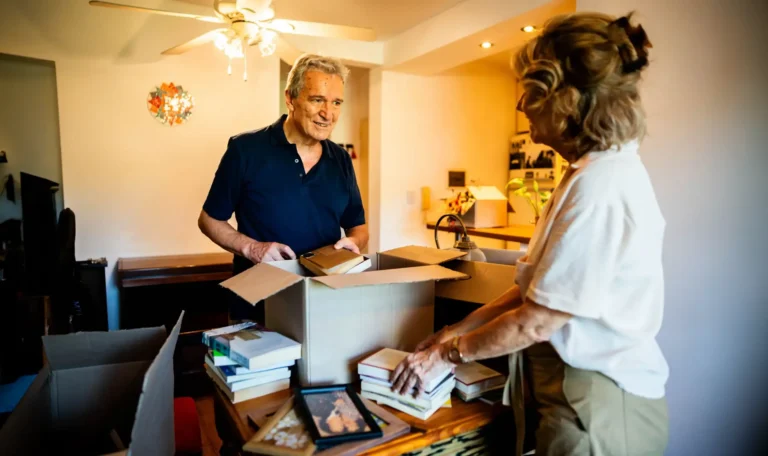
Even once you’ve made the emotional decisions, the logistical reality of managing a Sydney estate is formidable. A single property clearance typically requires coordinating removalists, rubbish removal services, charity donation drop-offs or collections, professional cleaning, and real estate agents — often all within a compressed timeframe driven by property lease or sale requirements.
In any other context, project-managing this number of moving parts would be a significant undertaking. But you’re not doing it in any other context. You’re doing it while processing grief, often while managing your own work and family commitments, and frequently from a distance — because a significant number of people managing Sydney estates are doing so while living interstate or even overseas.
The phone calls alone are exhausting. Getting quotes, confirming bookings, answering the same questions about access and timing, being available when one provider runs early and another runs late — this is the coordination burden that nobody mentions when they ask how you’re going. It’s not dramatic. It doesn’t make a compelling story. But it is relentless, and it is a genuine hidden cost of managing an estate without dedicated support.
Sydney’s particular geography adds its own layer of complexity. Navigating council collection schedules across different local government areas, identifying which charities in the Inner West, Northern Beaches, Eastern Suburbs, or Western Sydney accept which kinds of donations, understanding what can and cannot go to landfill — this is practical knowledge that takes time to acquire, time that grieving families simply shouldn’t have to spend.
The Relationship Strain Nobody Warns You About
How Estate Pressure Can Fracture Family Bonds
There’s another hidden cost that sits in the space between family members rather than on any to-do list. Estate management — even in close, loving families — has a way of surfacing differences in values, timelines, and emotional readiness that can create unexpected friction.
One sibling may feel ready to move forward quickly; another may need more time. One family member may feel a strong attachment to items that hold little significance to others. Decisions that seem practical to one person can feel dismissive or disrespectful to another. When these differences arise without a structured process or a calm, neutral guide, they can harden into grievances that outlast the estate itself.
This isn’t about blame. Grief changes people temporarily, and the pressure of timelines and logistics doesn’t create space for the gentle, unhurried conversations that might otherwise resolve these differences naturally. The hidden cost here is relational — and it’s one that many families only fully recognise in hindsight, when the estate has been settled but a distance has opened up between people who love each other.
Having an experienced, emotionally intelligent team facilitating the process — rather than leaving family members to navigate decisions among themselves under pressure — is one of the most quietly significant things that professional estate support provides. It’s not always the thing families think they need. But it’s often the thing they’re most grateful for.
The Cost of Not Knowing What to Let Go
Between Hasty Decisions and Endless Delay
Imagine the home of someone who lived fully and gathered a lifetime of belongings across decades. Now imagine trying to assess — quickly, alone, and while grieving — what is valuable, what is meaningful, what can be donated, what needs to be disposed of responsibly, and what should absolutely be kept for family members who haven’t yet had a chance to look.
Without a structured, supported process, families tend to fall into one of two patterns. The first is paralysis — the estate sits, the property timeline looms, and the inability to begin making decisions creates its own mounting pressure. The second is urgency-driven action that later brings regret — items of genuine sentimental or financial value donated or discarded because nobody had the bandwidth to slow down and assess properly.
Both of these outcomes carry real costs. The first prolongs the period of acute distress. The second can create lasting regret. A calm, methodical approach — with experienced support and a clear process for sorting, valuing, and moving items appropriately — is what allows families to move forward without sacrificing care for the sake of speed, or sacrificing progress for the sake of feeling unable to start.
What Professional Estate Support Actually Looks Like
End-to-End Care, Grounded in More Than Logistics
Tidy Transitions grew out of a social work background. That’s not incidental to what the service offers — it’s foundational to it. The care-first model means that the team understands this work isn’t primarily about moving furniture or filling boxes. It’s about supporting people through one of the most emotionally significant transitions of their lives, with the practical experience to manage every logistical element and the human intelligence to understand what families are actually going through.
What end-to-end deceased estate support in Sydney looks like in practice is a single, trusted team who can coordinate the entire process — from the initial walk-through of the property to the final clean — managing relationships with removalists, donation organisations, rubbish removal services, and other providers on your behalf. It means having someone who already knows the practical landscape of Sydney estate management: which charities accept furniture in good condition, how to navigate council requirements, how to work within the timelines that real estate agents and property administrators require.
But more than the logistics, it means having someone who understands the emotional register of this work. Families who have worked with Tidy Transitions often describe the same shift: arriving at the process feeling overwhelmed, uncertain, and alone — and discovering, gradually, that having a calm and experienced presence guiding the process made it possible to breathe again. “You brought calm to a very stressful situation” is not a remarkable thing to hear. It’s simply what this kind of support, done with genuine care, makes possible.
You Don’t Have to Figure This Out Alone
The First Step Is Smaller Than You Think
If you’ve read this far, it’s likely because something in these pages reflected your own experience back to you. The exhaustion of not knowing where to start. The weight of every object in a home that was a life. The quiet worry that the decisions you make now will matter, and that making them without support means making them less well than your loved one deserves.
That feeling is valid. And you deserve support that meets it properly.
The first step doesn’t have to be a large one. It doesn’t require a commitment or a signed contract or a clear plan. It can simply be a conversation — a chance to describe what you’re facing and understand what support is available to you. Tidy Transitions offers exactly that: a no-pressure, human conversation where you can ask questions, get a sense of what the process might look like, and decide in your own time whether it feels right.
Managing a deceased estate in Sydney is genuinely hard. The hidden costs — emotional, logistical, relational — are real, and they compound when you carry them alone. But they don’t have to be yours to carry without support. There is a better way through this, and it begins with a single, unhurried step in the right direction.
When you’re ready to talk, Tidy Transitions is here. Reach out for a gentle, no-obligation conversation about how we can help.